101424 research outputs found
Sort by
Gravity-dependent walk-run transition via saddle-node bifurcation and cusp catastrophe
 Full text link
The data used in Mau Adachi, Kazuo Tsuchiya, and Shinya Aoi, Gravity-dependent walk-run transition via saddle-node bifurcation and cusp catastrophe, Physical Review Research, 7, 013303 (2025). DOI: https://doi.org/10.1103/PhysRevResearch.7.01330
Dataset: Particle pinning as a method to manipulate marginal stability
 Full text link
The data used in Shiraishi K., Hara Y.. Particle pinning as a method to manipulate marginal stability. Soft Matter 21, 8824-8834 (2025); https://doi.org/10.1039/D5SM00898K
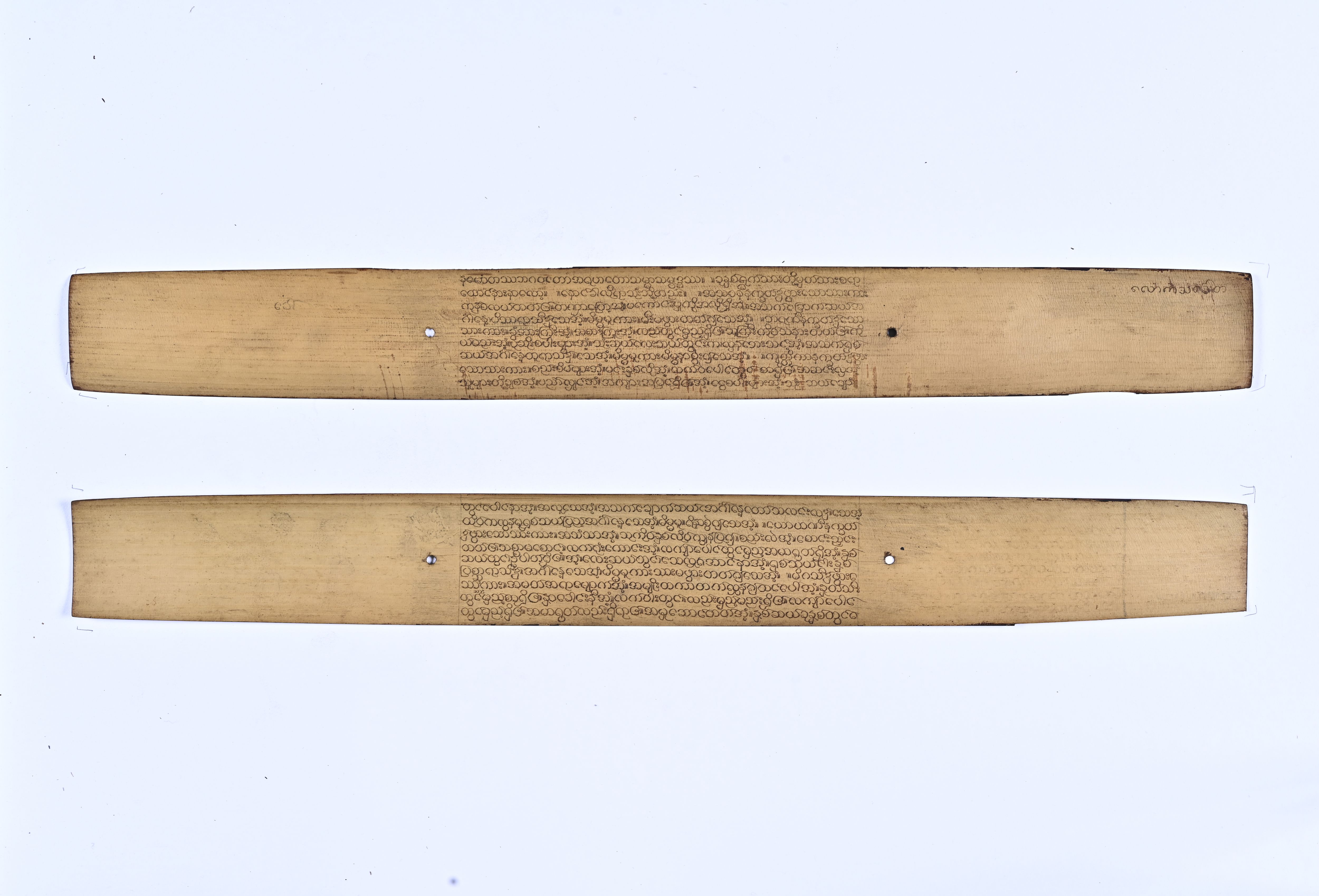
古代椰子の葉経典ペーザ(中巻)
 Full text link
書名は所蔵元で付与されたもの以下の内容を含む1) ဂနန်းသံပေါက်စာ / ガナンタンバウッ(数字のタンバウッ詩) / 書写年:緬暦1249年ダザウンモウン月白分3日書写終了 / 書写年は結語による / 画像5-122) ပရိတ် / パレイッ(護呪経) / 書写年:緬暦1249年ワーガウン月白分7日書写終了 / 書写年は結語による / 「パレイッ」は「パリッタ」のこと / 画像16-233) ရွှေစိဂုဏ်သမိုင်းစာ / シュエズィゴウンタマインザー(シュエズィゴウンの歴史) / 書写年:緬暦1249年トーダリン月黒分8日木曜日書写終了 / 書写年は結語による / 画像25-284) ရေဝန်းတောရဘုန်းတော်ကြီးမေတ္တာစာ / イェーウントーヤポウンドージーミッタザー(イェーウントーヤ僧侶の慈愛の書)/ 書写年:緬暦1249年トーダリン月黒分6日水曜日終了(終了とのみ書かれている)/ 文書名は結語による / 画像30-375) 書名未記載 / 画像40-446) ပုတ္တောဝါဒ / ポウットーワーダ(息子への教訓の書) / 書写年:緬暦1249年ダザウンモウン月白分1日書写終了 / 書写年は結語による / 画像51-627) ကြည်းကန်နှင့်။ပေါက္ကံမောင်ချိုဝ်စကားပုံ / チーガンフニンパウッカンマウンチョーザガボウン(チーガンとパウッカンマウンチョーの諺)/ タイトルは結語より / 書写年なし / 画像64-738) ဦးပဏ္ဠိစာဖြစ်သည်။လောကီမှတ်ပုံ။ / ウー・パンディサーピッティ。ローキーフマッポウン(ウー・パンディの書。現世の覚書) / 書写年:緬暦1249年トーダリン月白分4日水曜日終了(終了とのみ書かれている) / 書写年は結語による / 画像74-819) ဦးပန္ဒိစာ။စကားပုံ / 1葉のみ。欠葉ありと思われる / ウー・パンディサー。ザガボウン(ウー・パンディの書。諺) / 書写年なし / 画像8210) ဗောဓိဒီပက / ボーディヂーパカ(成道燃灯) / 書写年:緬暦1249年トーダリン月黒分3日水曜日書写終了 / 文書名・書写年は結語による / 画像84-8611) လောကသင်္ခေတ / ローカティンケータ(現世の記号) / 書写年:緬暦1249年ダディンジュッ月白分12日水曜日書写終了 / 画像88-10512) 書名未記載 / 1葉のみ。欠葉ありと思われる / 画像10913) 書名未記載 / 1葉のみ。欠葉ありと思われる / 画像111-11514) သပ္ပူရိသဓမ္မဓိပဏိ / タップーリタダンマディパニ(高徳な人物としての教えの注釈) / 書写年:緬暦1255年ワーガウン月黒分2日書写終了 / 途中白紙あり / 画像116-19315) မနုဿဝိနယဒီပဏီ / マノウッタウィナヤディパニィ(人間の律の注釈) / 書写年なし / 画像197-20816) သင်္ခါရဘာဇနီ / ティンカーヤバーザニィ(無常) / 画像213-23517) သြောဝါဒစာ / オーワーダザー(教訓の書) / 欠葉ありと思われる / 画像236-244個人蔵資料 / データ作成者:井上 さゆ
Data for " In vivo aortic elasticity measurement using electrocardiogram-gated computed tomography: validation with ex vivo loading test "
 Full text link
This data includes 2 files. The source code file shows the program for non-invasive measurement applied in the article. The spreadsheet shows the patient background and the measurement value of each case in the article. The avreviation using in the spreadsheet shows below; BMI; body mass index, HT; hypertention, DM; diabetes millitus, DL; dyslipidemia, CKD; chronic kidney disease, BP; blood pressure, EGCT; electrocardiogram gated computed tomography, ATAA; ascending thoracic aortic aneurysm, TBAD; type B aortic dissection, AAE; annuloaortic ectasia.Article Title: In vivo aortic elasticity measurement using electrocardiogram-gated computed tomography: validation with ex vivo loading test / Submitted Journal: European Heart Journal: Cardiovascular Imagin
Data for "Acquisition of similar properties by filters in the same stream of a multistream convolutional neural network"
 Full text link
The data used in Tamura, H. Acquisition of similar properties by filters in the same stream of a multistream convolutional neural network. Sci Rep 15, 67 (2025). https://doi.org/10.1038/s41598-024-84981-
Data for "An analysis of information segregation in parallel streams of a multi-stream convolutional neural network"
 Full text link
The data used in Tamura Hiroshi. An analysis of information segregation in parallel streams of a multi-stream convolutional neural network. Scientific Reports 14, 309 (2024); https://doi.org/10.1038/s41598-024-59930-7
Data used in "An Innovative EFD Using FBG Pressure Sensors for Ship Seakeeping "
 Full text link
The data used in Suzuki, K., Iwashita, H., Kashiwagi, M. et al. An innovative EFD using FBG pressure sensors for ship seakeeping. J Mar Sci Technol (2024). https://doi.org/10.1007/s00773-024-00986-5.CAD Data-RIOS_Bulk.zip:This zip file includes CAD data for the RIOS bulk carrier (RIOS_T_20180116_hull_L150ver2.igs) and a fine mesh of half-side data (rios-bulker.dat). The shape of the model is the same as included in the data_v1.zip. Only the numbers of the grid are different.experimental dat
A demographic and nutritional analysis of urban lower-class dwellers in modern Japan revised version: the case of one Saimin-chiku in Tokyo, ca.1930
 No full text
* Revised:Kenichi Tomobe, Minori Oshidari, Keisuke Moriya [22-06, 2022]This study aims at investigating a method to measure the standard of living, nutritional status, and physical condition of the saimin (“the poor") who suddenly appeared in the modern age and settled there despite their poverty. In the study of social science, the mainstream theories of poverty are Charles James Booth's stratification theory based on income level and Benjamin Seebohm Rowntree's minimum cost of living theory based on the cost of living; both have their merits and demerits. This paper will measure the poverty levels in terms of income and cost of living using data from a specified sub-district located in Tokyo (the results of an on-site survey of approximately 180 households). Many households living in the Saimin-chiku faced poverty both income levels and cost of living. In addition, observation of the health status of the saimin households showed that roughly half of the community had a disease of some sort, or a tuberculosis patient in the household. This provides a perspective which illuminates the difference in situation between the saimin households, who made a living based on an economy of mutual support, and the small farmer households, who had a communal consumption lifestyle but had the capacity to be self-supporting
Higher-Order Misspecification and Equilibrium Stability
 No full text
*Revised:[DP-2023-E-002, August 2]This paper considers a Bayesian learning problem where strategic players jointly learn an unknown economic state, and show that one's higher-order misspecification (i.e., one's misspecification about the opponent's misspecification) can have a significant impact on the equilibrium outcome. We consider a simple environmental problem where players' production, as well as an unknown state, affects the quality of the environment. Crucially, we assume that one of the players is unrealistically optimistic about the quality of the environment. When this optimism is common knowledge, the equilibrium outcome is continuous in the amount of optimism, and hence small optimism leads to approximately correct learning of the state. In contrast, when the optimism is not common knowledge and each player is unaware of the opponent having a different view about the world, the equilibrium outcome is discontinuous, and even vanishingly small optimism leads to completely incorrect learning. We then analyze a general Bayesian learning model and discuss when such discontinuity arises