16115 research outputs found
Sort by
Restorative Retail Experiences in UK Fashion Retail Servicescapes
 Full text link
The chapter explores restorative retail experiences within the context of fashion servicescapes within the UK, considering the growing opportunities appearing in the wellness and fashion retail’s experience economies. The study considers the effects of a variety of restorative experience forms on consumer well-being, uncovering the successful characteristics of such experiences, and exploring what influences them. It aims to elicit the future potential of implementing restorative customer experiences within physical fashion retail

From Laughter to Lament: Mapping the Rise and Fall of Humour in Hong Kong Activism 2019–2020
 Full text link
This article examines the emergence, transformation, and eventual decline of humour in the 2019–2020 Hong Kong protest movement through discourse analysis, supported by first-hand participation and semi-structured interviews. It argues that humour initially offered temporary superiority over authority, fostered solidarity, and shaped lived experiences of collective resistance. However, the classist and meritocratic implications embedded in protest humour fractured the movement. The deliberate overlook within the jokes further undermines the validity of the humour. The nationhood invoked through humour also became a tacit test of allegiance. Externally, escalating state violence and the imposition of the National Security Law rendered humour increasingly untenable, shifting affective registers from laughter to grief, trauma, and self-censorship. By mapping this transition, the article demonstrates how humour can move from an empowering practice to a divisive and even detrimental force, contributing to broader debates on affect, censorship, and the politics of expression under authoritarianism
A Collaborative Imperative: Embodied Design Pedagogies for Democracy
 Full text link
As four design educators from different countries in the global north, and with varied lived experiences, we are alarmed by the global rise of the far right and the weakening of democratic initiatives for social, climate and educational justice. Inequality is rising and human rights are at risk; from the Supreme Court Ruling Act in the UK that means trans women are no longer legally recognised as women, to ongoing rulings against academic freedom on higher education campuses.
What does this erosion of fundamental democratic values, including DEI initiatives, gender equality, indigenous sovereignty, and trans people’s rights, and the rise of the far right across the globe mean for us as design educators – personally and professionally, for our students, our communities, and our institutions? How might design education be used to promote democracy?
We believe there is an urgent need to come together as a community across disciplines to create a critical mass of activist-scholar-educators that embody and enable values of democracy.
We are proposing a workshop to explore the question: how can design educators and students across different disciplines collaborate to face threats to democracy? What would that community of leading learners and learners teach and learn? How would that community (have to) act? What are their responsibilities and possibilities? How can we leverage agency into actions?
This workshop takes inspiration from the kitchen table which has been used as a site of resistance for feminist praxis to develop initiatives, practices, teaching strategies, action plans, ideologies, methods & formats to create transformative ways of engaging our students with the urgent need to recontextualize our current systems of design learning. In multidisciplinary groups, we will work through a series of provocations to facilitate rich exchanges of experiences and development of design pedagogies for democracy
Forming Digital Futures: 3D CAD Technology Adoption Among Small Fashion Designers
 Full text link
3D Computer-Aided Design (CAD) software is reshaping fashion design and manufacturing, yet its implementation among small designer brands still needs to be studied. This study addresses this research gap by examining how small fashion designers adopt and utilize 3D CAD technology, focusing on implementation strategies and barriers to adoption. Eight semi-structured interviews were conducted with London fashion designers and digital innovation experts to investigate the technological capabilities, limitations, and future potential of 3D design tools.
The findings reveal significant benefits of 3D CAD adoption, including enhanced design iteration speed, reduced physical sampling costs, and increased ability to respond to market changes. However, small designers face distinct technological challenges, such as high hardware requirements (minimum £2,000 investment in computing equipment), steep software learning curves (averaging 6-12 months for proficiency), and limited access to technical support. Despite these barriers, their organizational agility enables innovative applications of these digital tools, such as hybrid physical-digital workflows and collaborative technology sharing.
These insights suggest that while 3D CAD technology can significantly enhance small-scale fashion design operations, broader industry adoption requires addressing accessibility barriers. The study recommends developing targeted training programs, establishing technology resource-sharing networks, and creating collaborative platforms to democratize access to 3D design capabilities. This research contributes to understanding how digital tools can transform small-scale fashion design while providing practical pathways for technology adoption across the industry
On Unstitched Futures
 Full text link
This articles discusses how the act of slowing down and not sewing and not stitching can provide a critical intervention in fashion’s sped-up system and show that an alternative ecological and socially regenerative fashion process is possible. Could this approach challenge the structures of knowledge, that result in myths related to Eurocentric and Anglo-American forms of thinking dominated by an objectivist and universalist knowledge system? Could the act of not sewing help to re-think fashion’s dependency away from capitalist economies in which fashion consumers are seen as passive and disconnected from both the designer, the design process and global inequalities
Arts and Health for Older Adults
 Full text link
The numbers of older people are growing rapidly across the globe. There is increasing interest in creative ways to support older people to live well and to maximise their wellbeing, including those with conditions such as dementia. This chapter considers the evidence on arts and creativity to improve the wellbeing of older people with a focus on creative projects developed for those with dementia. Research across multiple art forms and outcomes in a number of key areas is presented, with ideas for future research suggested
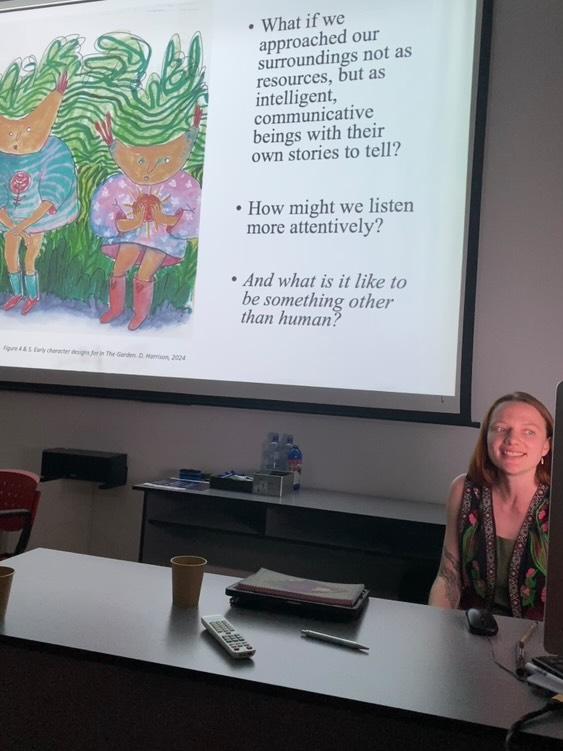
In the Garden: Listening, Learning, and Animating the More-than-Human
 Full text link
This presentation explores the intersection of expanded animation, ecological consciousness, and interspecies communication through In the Garden: Giggles in the Greenery, a collaborative multimedia project within the graphic anthology Anima Mundi. Bringing together 12 artists across disciplines, the project engages with the sensory and symbolic dimensions of entheogenic plants through animation, sound, and visual storytelling, evoking more-than-human ways of knowing. Drawing on historical, mythological, and spiritual research, the project engages with animation as both an artistic and epistemological tool—one that enables us to listen, translate, and speculate on knowledge beyond the human (Schultes, Hofmann & Rätsch, 1998; Lehner & Lehner, 1960).
Inspired by Jane Bennett’s (2010) concept of vibrant matter, which emphasizes the agency of non-human entities, In the Garden considers how materials themselves participate in shaping knowledge. This idea resonates with animation’s capacity to render the unseen visible, offering a speculative means to explore the communicative and epistemological capacities of the more-than-human world. The project also reflects Ursula K. Le Guin’s (2017) assertion that speculative storytelling allows us to question dominant anthropocentric narratives while fostering a deeper attunement to the ecological systems we inhabit.
At its core, Anima Mundi is rooted in the recognition that intelligence and communication exist in forms entirely different from our own (Bridle, 2022; Kohn, 2013). By embracing both publication and animation, the project creates artefacts that invite audiences to engage with the ways plants, fungi, and minerals communicate across time, space, and symbiotic relationships. The first installment, In the Garden, specifically explores entheogenic plants and their historical role as guides and mediators of consciousness, offering an alternative framework for understanding interspecies interactions (Tsing, 2015).
This presentation will showcase both the publication and the animated film, examining how animation—through its ability to visualize the unseen—can function as a conduit for interspecies storytelling. How can artistic research, through embodied and sensory practices, expand our capacity to know beyond the limits of human language (Ingold, 2011)? How might collaborative processes with other artists, materials, and living beings open new ways of perceiving truth and interconnectedness?
Through speculative storytelling and artistic research, In the Garden investigates how deep listening, embodied knowledge, and animation’s unique capacity for metamorphosis can reshape our understanding of truth, interconnectivity, and ecological awareness. By attending to the voices of the more-than-human world, this project aligns with the symposium’s broader questions about how knowledge is shaped through media and how artistic practice can offer forms of resistance to dominant, anthropocentric frameworks
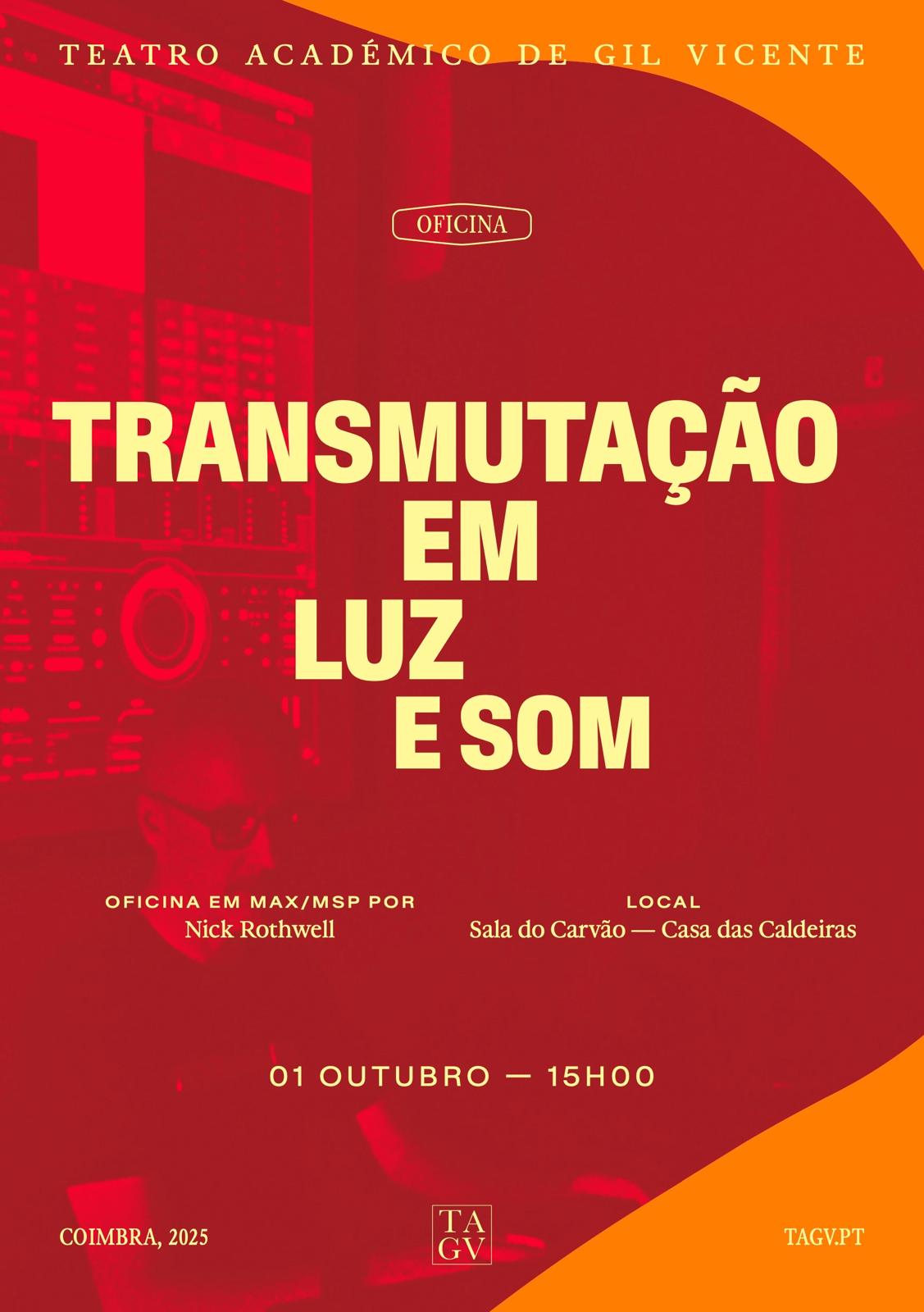
Transmutação em Luz e Som
 Full text link
A Max/MSP/Jitter workshop entitled “Transmutação em Luz e Som” (Transmutation into Light and Sound) at the University of Coimbra, Portugal: Sala do Carvão - Casa das Caldeiras, Teatro Académico de Gil Vicente
Responsible and Sustainable Beauty Consumption for Wellbeing of Older Adults
 Full text link
Research on ageing explains the coping patterns adopted by adults once they face a decline in their physical, financial, and social status with contemplation of life expectancy. In response to the changing global trends about longevity, healthy ageing, and wellbeing, the United Nations (UN) initiated this debate. They referred to it as the debate about the 2021-2030 decade of healthy ageing. Different from traditional disease-focused research, the field of healthy ageing has emerged as a significant area of therapeutic inquiry, offering science-based strategies for better management of wellbeing. Considering the gap highlighted from review of literature about the impact of healthy ageing trends in the era of social media and its impact on the consumption of beauty for subjective personal wellbeing by older consumers, a research model to be tested by future researchers is conceptualised. The overarching goal of this study was to study the influence of scientifically responsible and sustainable beauty products when offered to older consumers with perspective of socially responsible communications